
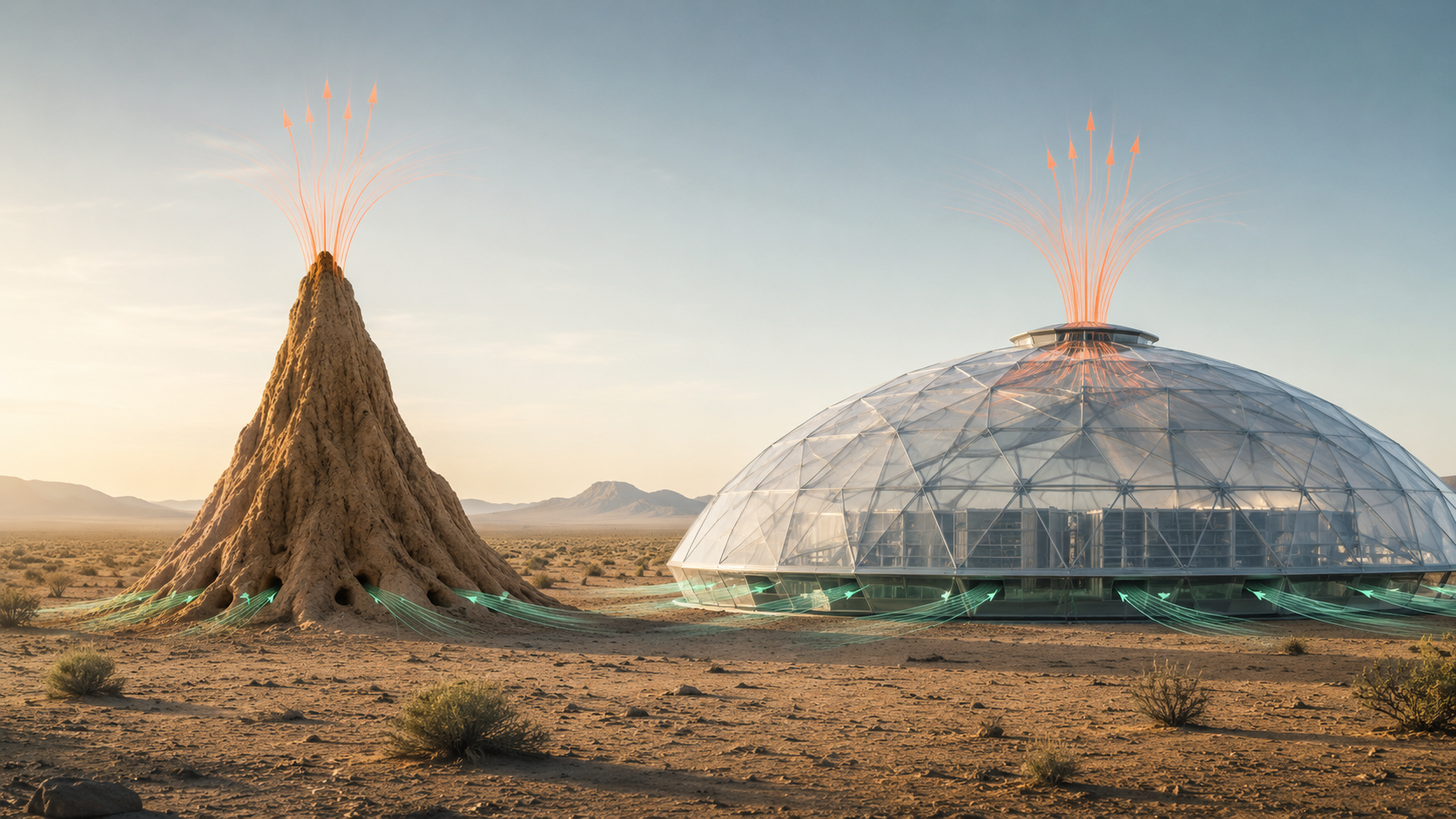
Infrastructure designed by nature.
A patent-pending ETFE dome: passive-air-cooled, near-zero water, AI-dense from day one, and live in months. Built to host the latest NVIDIA racks, and to give its heat back to the place around it.
The building is the cooling system.
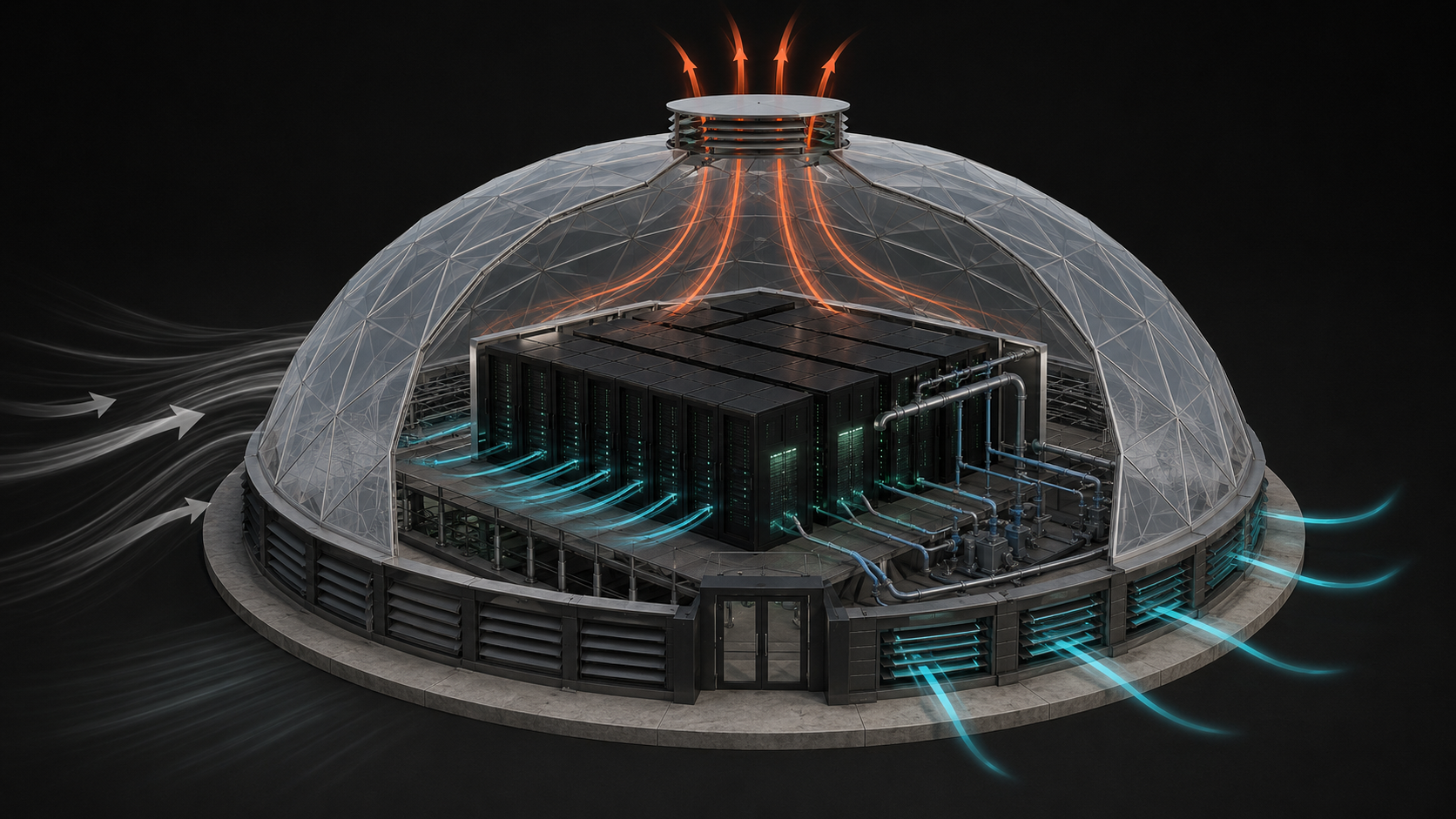
Most data centres fight their own heat with banks of mechanical cooling. Ours works with the physics. The ETFE envelope and the internal IT pod are engineered as one aerodynamic system, so air moves through the building on its own: cool in at the base, warm up and out at the apex. Direct liquid cooling lifts the bulk of the heat off the chip; the dome carries the rest. Smaller plant. Less water. Less energy. More resilience.
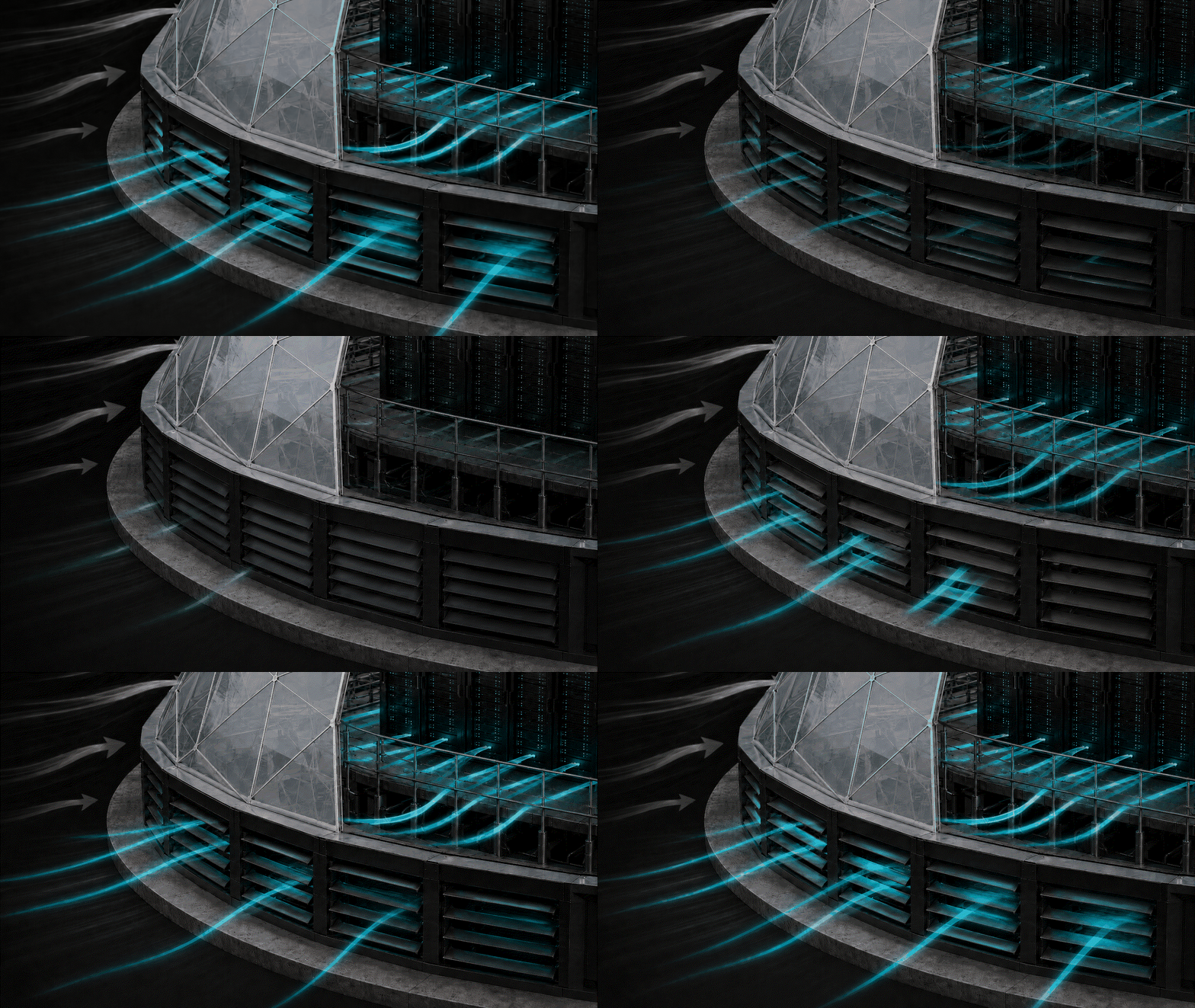
It's in how the dome and the pod talk.
Our design isn't just "a dome that convects". It's the specific geometric relationship between the ETFE shell and the IT pod that holds the servers, tuned to keep air moving without forcing it. That coupling is patent pending, filed worldwide. It's what lets a lightweight, translucent envelope do the work a mechanical hall usually does.
What the geometry earns you.
| Metric | BlaqCat Dome (design target) | Industry typical |
|---|---|---|
| PUE | ~1.12 target | 1.4–1.6 |
| Routine water | ~0 L/kWh (closed-loop) | millions of L/day |
| Build to live | ~6–7 months | 18–36+ months |
| Capacity step | 2 MW blocks, scale on demand | 200 MW–1 GW campus |
| Envelope | Translucent ETFE, column-free | Rectangular, columned |
Figures are BlaqCat design targets, confirmed per site through CFD and integrated testing, and published per site from first commissioning.
Lighter to raise. Clear enough to grow under.
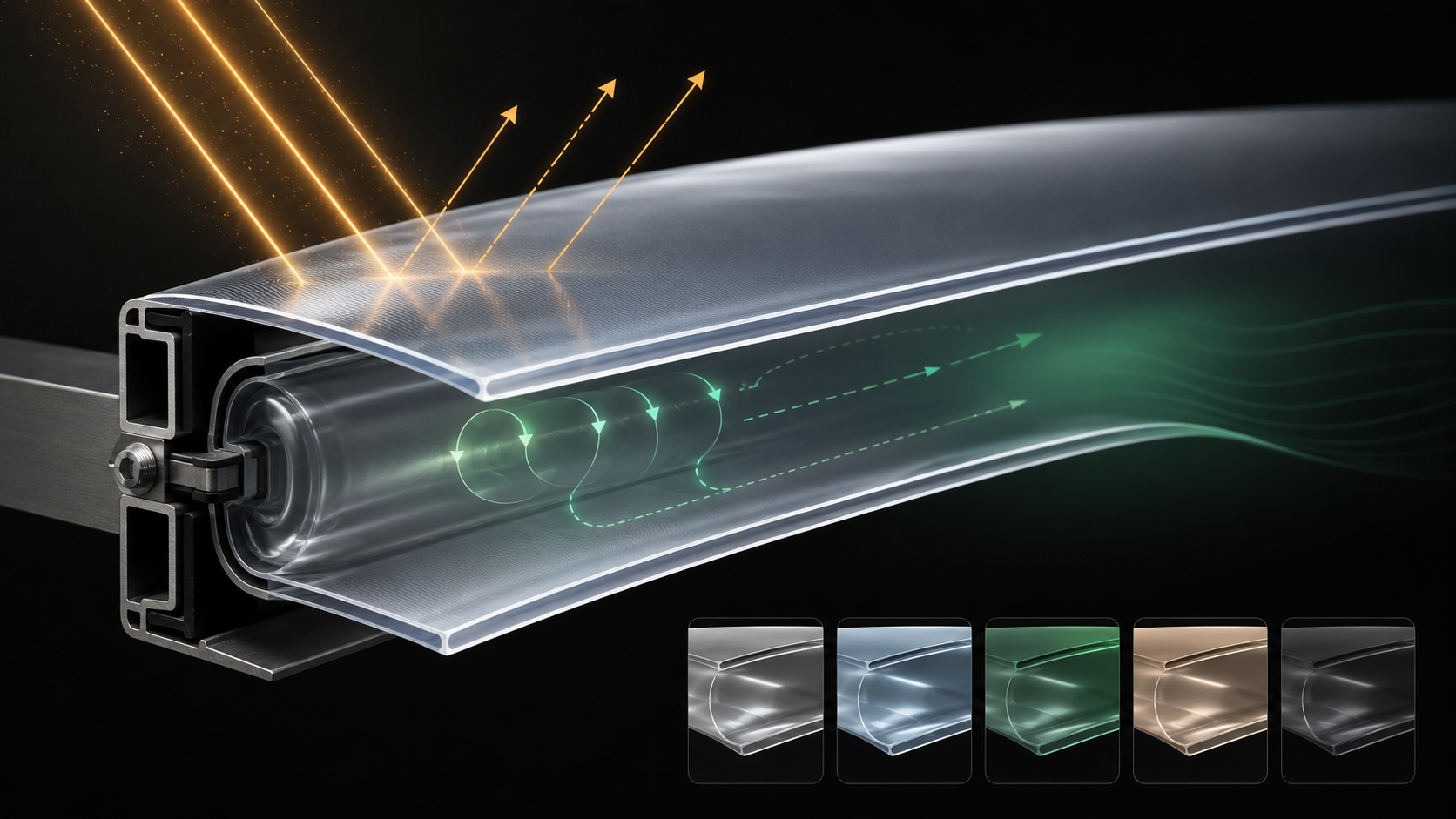
ETFE is a fraction of the weight of glass or steel, so the dome goes up faster with lower embodied carbon, and it's durable and recyclable. And unlike an opaque shell, ETFE lets daylight through, which is why a BlaqCat dome can host compute and grow food under the same roof.
Sized to whatever ships next.
Vendor-neutral hardware, cooling matched to the workload. The pod isn't capped by our cooling (the ceiling is the power a site can bring) so it carries today's densest AI training and inference, and the next generation on the same footprint.
Air-assisted
Standard racks. The dome's natural airflow does the heavy lifting.
Direct liquid cooling (DLC)
Our default for the latest NVIDIA AI racks. Heat lifted straight off the chip.
Immersion
For the highest densities, where every watt counts and every millimetre matters.
Future-ready pod
The IT pod is the part that evolves: swap racks, refresh silicon, or change cooling topology without touching the dome. The building stays; the compute moves forward.
We don't wait in the queue.
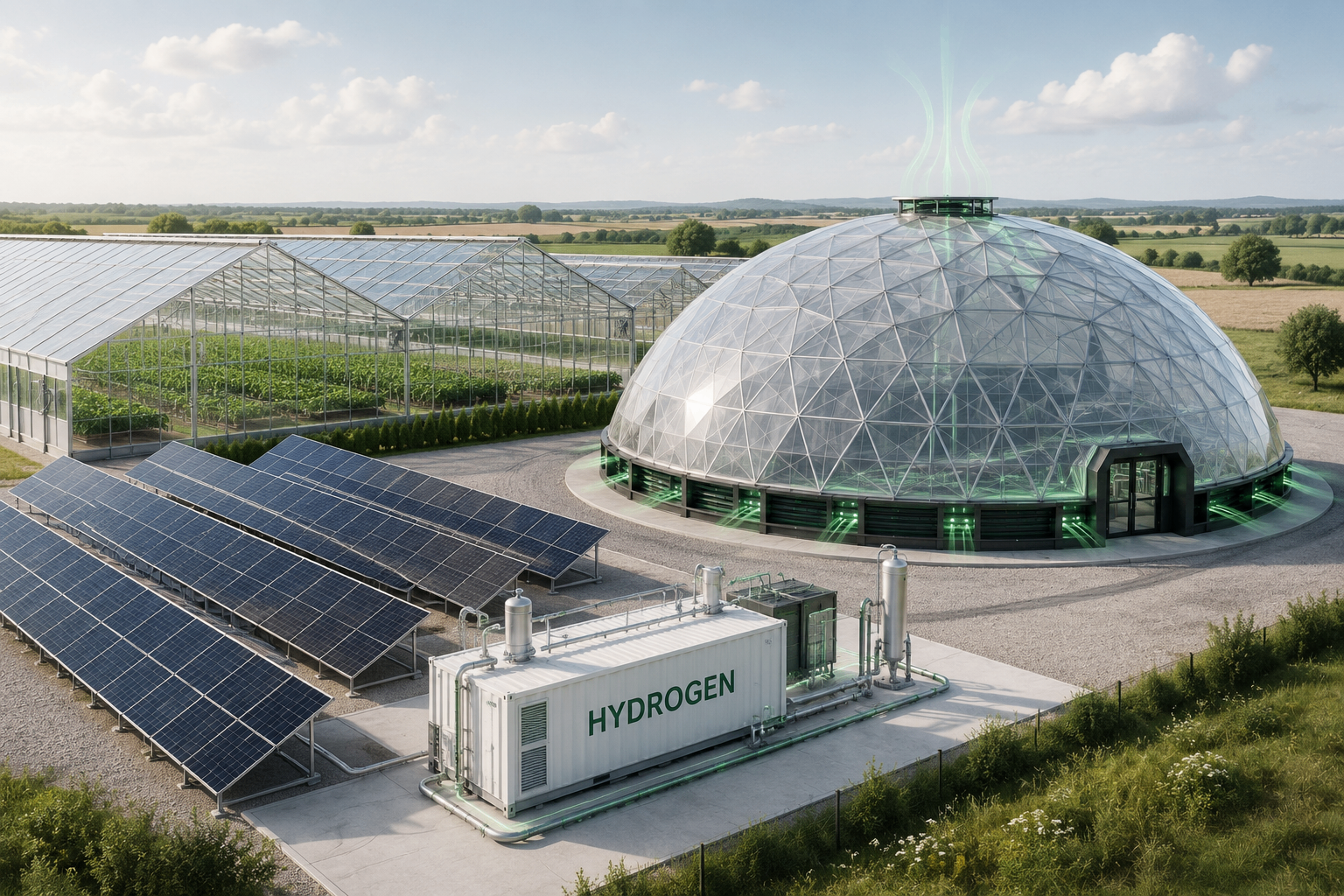
Grid interconnection now runs to years in the markets that want AI most. A BlaqCat dome doesn't wait in that line. Where a site already has power, we hook into the local network. Where it doesn't, we bring power to the site, behind the meter: generation sized to the campus, online in months, independent of the substation queue. And the mix is built clean: we work with partners across hydrogen, fuel cells, solar PV and wind, so a dome runs on power that fits the site and the carbon commitment. Because it needs so little water and so little mechanical cooling, a dome can also sit on stranded or underused pockets of energy others can't reach.
Earlier revenue. Right-sized capital.
Live in months, not years, and every month earlier is a month of revenue. Because we deploy in 2 MW blocks, capacity tracks contracted demand block by block: no gigawatt bet, no stranded capital. Passive-first cooling shrinks the plant, so the operating cost looks different from day one.
The same drop cools the chip, then grows the salad.
ServerGro™ harvests rainwater and runs a closed loop, so a dome barely touches the mains, and the water that manages the heat then feeds the crops. Near-zero evaporative draw. The town keeps its water.
One design. Any climate.
The same standard dome architecture adapts through bolt-on climate packs, so it runs as confidently in desert heat as it does in northern cold. Water is treated as a resource, not a crutch: harvested, recirculated and only called on when the climate genuinely demands it.
Hot climates
Natural convection and ETFE's low solar gain keep air moving without relying on evaporative cooling. The dome is engineered for extreme heat without extreme water use.
Cold climates
Free-air cooling for much of the year. The same geometry that vents heat in summer captures and manages it in sub-zero conditions, with minimal mechanical intervention.
Water only where necessary
Rainwater is harvested and recirculated in a closed loop. What little water the system uses goes first to cooling, then to the crops. No millions of litres evaporated into the air daily.
Same architecture, different weather
Temperate, urban-heat, agricultural, coastal or cold: each site gets the same proven dome, tuned by a climate pack rather than redesigned from scratch.
Commissioned, not claimed.
Every dome is modelled and tested before sign-off: CFD, factory and site acceptance, integrated systems testing and staged thermal validation, aligned to ISO 27001 and IEC 62443, with carrier-diverse connectivity and full monitoring and SLA reporting. Detailed engineering evidence available under NDA.